Choosing among the 7 Best Stainless Steel Coil Tubing Suppliers requires more than comparing catalog prices. Stainless Steel Coil Tubing supports demanding applications in instrumentation, heat transfer, chemical processing, and energy equipment. Small differences in alloy consistency, wall thickness, and surface finish can affect installation and service life.
This guide examines suppliers through practical purchasing criteria. These include 316L and other available grades, outside diameter control, coil length, pressure capability, welding quality, and corrosion resistance. Reliable manufacturers should provide material test reports, dimensional records, traceability, and clear production standards. Certifications matter, but they should support real quality rather than decorate a sales page. A clean certificate does not automatically prove dependable tubing.
Details matter.
Experienced buyers also review lead times, minimum order quantities, packaging, technical support, and response quality. A supplier that answers difficult questions clearly may be more valuable than one offering the lowest quote. Sample inspection can reveal ovality, rough edges, inconsistent annealing, or damaged protective wrapping before a larger purchase. These checks are especially useful when tubing must pass through tight bends or operate under changing temperatures.
No ranking fits every project. A supplier serving offshore systems may not suit laboratory equipment or compact instrumentation. This selection aims to identify credible companies with useful capabilities, documented quality practices, and practical customer support. Some information can change, so readers should confirm current specifications directly with each supplier. Careful comparison remains necessary. The best choice is not always the largest manufacturer, but the one that consistently matches your technical, commercial, and delivery requirements.
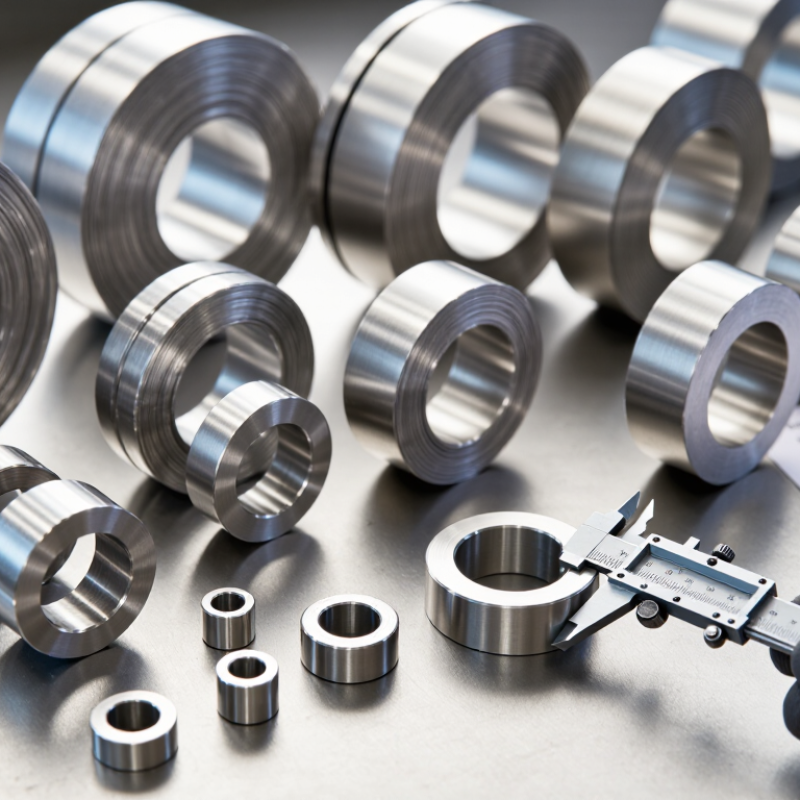
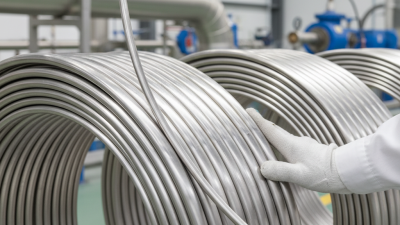
Stainless steel coil tubing is a long, continuous tube wound into a compact coil. Unlike straight pipe, it reduces connection points and supports faster installation in confined areas. Common applications include heat exchangers, instrumentation lines, hydraulic systems, chemical processing, and selected well-intervention operations.
Material choice matters. Austenitic grades offer strong corrosion resistance, while higher-alloy grades handle chlorides, acids, and elevated temperatures more effectively.
ASTM A269 covers seamless and welded austenitic stainless tubing for general corrosion-resistant service. ASME B31.3 also provides design guidance for process piping systems. These standards do not guarantee performance by themselves.
According to the World Stainless Association, global stainless steel production reached 58.4 million metric tonnes in 2023. That scale supports broad availability, but quality can still vary sharply between suppliers.
The best suppliers should provide mill certificates, dimensional tolerances, pressure-test records, and full heat-number traceability. Coil length, ovality, surface finish, and minimum bending radius deserve close review. A bright surface may look excellent while hiding poor internal cleanliness. That assumption is risky.
The word “best” remains slippery. A supplier suited to offshore service may not fit food processing or laboratory instrumentation. Buyers should compare alloy selection, manufacturing controls, inspection depth, delivery consistency, and technical support. In practice, the cheapest coil can become expensive after repeated leaks, difficult forming, or premature corrosion. Small details matter.
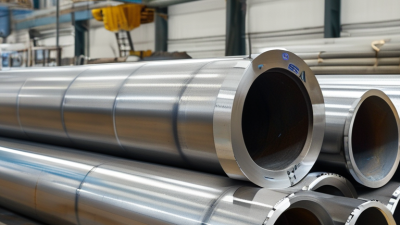
A reliable coil tubing supplier should prove compliance before discussing price. API Specification 5ST defines key requirements for coiled tubing manufacturing, testing, and documentation. Ask for material certificates, dimensional records, weld procedures, and full heat traceability. Each coil should have a visible identification trail.
Evaluate performance with numbers, not polished brochures. Review yield strength, tensile strength, burst pressure, collapse resistance, and fatigue life. Require test results at the intended temperature, pressure, and bending radius. For sour environments, verify compliance with ISO 15156 and documented hardness controls. The 2024 IEA Oil report projects global oil demand at 105.4 million barrels per day by 2030. That outlook increases pressure on intervention equipment, but it does not excuse weak qualification records.
Fatigue data deserves special attention. Request cycle-life testing that reflects repeated injector passes, reel bending, and pressure changes. Check whether results represent production coils or only laboratory samples. EIA’s June 2024 Short-Term Energy Outlook projected U.S. crude production at 13.2 million barrels per day in 2024 and 13.7 million in 2025. Higher activity can expose inconsistent quality quickly. Inspect non-destructive testing methods, calibration dates, repair limits, and rejection criteria. A certificate alone is not enough. I would question any supplier that hides test conditions. Some specifications remain unclear. That gap should be recorded, not ignored. Evaluate delivery history, technical response time, and field failure reporting with equal discipline.
Comparing the seven best stainless steel coil tubing suppliers requires more than checking price lists. Start with the tubing itself. Ask whether each supplier offers seamless or welded construction, and request the exact stainless steel grade. Confirm outer diameter, wall thickness, coil length, and allowable tolerances. These details affect installation, pressure control, and service life. A polished surface may look impressive, but internal cleanliness matters more in demanding systems.
Documentation separates a capable supplier from a risky one. Request material test reports, heat numbers, dimensional inspection records, and pressure-test results. Check whether testing follows a recognized industry standard. I also compare sample quality before approving a large order. One supplier may provide excellent paperwork but inconsistent coil straightness. Another may respond quickly yet avoid technical questions. That hesitation matters.
Delivery and support deserve equal attention. Compare minimum order quantities, production capacity, packaging, and realistic lead times. Ask how coils are protected against moisture, dents, and contamination during transport. A useful supplier should explain its inspection process without vague promises. My own early comparison focused too heavily on unit cost. It ignored replacement delays and installation labor. That was a costly oversight. I now score each supplier on quality evidence, engineering communication, customization, and after-sales response. Small differences become obvious when every answer is recorded.
The seven best stainless steel coil tubing suppliers show measurable production strength, not polished websites alone. The World Stainless 2024 statistics reported roughly 58.4 million metric tonnes of stainless crude steel production in 2023. That scale increases material availability, but it does not guarantee tubing consistency. Experienced suppliers should explain mill sources, forming equipment, welding methods, and maximum coil lengths. Ask for actual production records. Marketing language is not enough.
Quality control should cover the full route from billet to finished coil. Reliable suppliers verify chemical composition with spectrometry and inspect welds using radiographic or ultrasonic methods. They should also provide hydrostatic, eddy-current, dimensional, and surface-finish results. ASTM A269, ASTM A789, and relevant ASME requirements offer useful benchmarks for seamless and welded tubing. The ISO Survey 2023 recorded more than one million ISO 9001 certificates worldwide, yet certification alone proves limited technical ability. Audit reports matter more. I would request heat numbers, calibration records, and traceable test certificates.
Customization separates a capable supplier from a convenient reseller. Options may include 304L, 316L, and higher-alloy grades, with controlled outer diameter, wall thickness, hardness, and coil length. For sour or offshore service, buyers should review corrosion testing, chloride exposure data, and low-temperature performance. Some suppliers can add special cleaning, passivation, end fittings, or protective packaging. Tolerances should be agreed before production. A small detail can become an expensive failure. The most dependable choice combines verified data, practical engineering support, and honest limits.
How to Select the Right Stainless Steel Coil Tubing Supplier
Selecting a stainless steel coil tubing supplier requires more than comparing prices. Check material certificates, coil dimensions, weld records, and pressure-test results. A dependable supplier should explain the grade, outer diameter, wall thickness, and tolerance clearly. Request traceability from raw material to final inspection. If answers remain vague, pause before ordering.
Match the supplier’s production capacity to your application. Heat exchangers, hydraulic systems, and instrumentation may require different surface finishes and bending performance. Ask for sample lengths, ovality data, minimum bend radius, and packaging details. Confirm lead times in writing, especially for custom sizes. A frequent mistake is focusing on price while overlooking inspection quality. No checklist is perfect. Unusual temperatures or corrosive fluids can expose gaps later.
Tips: Request a recent inspection report and a small sample before placing a large order. Verify the supplier’s quality procedures and testing equipment. Discuss technical support, replacement policies, and communication methods early. Keep drawings and specifications updated. It is tempting to choose the fastest quotation, but consistent quality usually protects the project better.
A practical comparison matrix based on material grades, manufacturing routes, applicable standards, dimensional capability, testing, and typical applications.
| Rank | Supplier Profile | Best-Fit Application | Typical Material Grades | Typical Outside Diameter | Typical Wall Thickness | Common Product Standards | Quality and Testing | Key Selection Advantage |
|---|---|---|---|---|---|---|---|---|
| 1 | Precision Welded Tubing Supplier | Instrumentation lines, hydraulic control panels, analytical systems, and general process tubing. | 304L, 316L | 6.35–25.4 mm | 0.5–3.0 mm | ASTM A269, ASTM A249, EN 10217-7 | Eddy-current or hydrostatic testing, weld inspection, dimensional inspection, and material certificates to EN 10204 3.1. | Cost-efficient production with good dimensional consistency and availability for standard sizes. |
| 2 | Seamless High-Pressure Tubing Supplier | High-pressure hydraulic, gas, chemical injection, and severe-service applications where weld integrity is a major concern. | 316L, 321, 347 | 3.18–25.4 mm | 0.5–4.0 mm | ASTM A213, ASTM A269, EN 10216-5 | Hydrostatic testing, ultrasonic examination where specified, tensile testing, hardness testing, and positive material identification. | No longitudinal weld seam; suitable for demanding pressure and cyclic-service designs when properly engineered. |
| 3 | Duplex Stainless Steel Tubing Supplier | Offshore systems, seawater service, desalination plants, and chloride-bearing process environments. | 2205 / UNS S32205 or S31803 | 6.35–25.4 mm | 0.8–3.5 mm | ASTM A789, ASTM A790, EN 10216-5 | Phase-balance verification, ferrite measurement, corrosion-related testing where required, hydrostatic testing, and PMI. | Higher strength and improved chloride resistance than common austenitic grades, allowing efficient wall-thickness design. |
| 4 | Super Duplex Tubing Supplier | Subsea control lines, offshore topside equipment, concentrated seawater, and high-chloride service. | 2507 / UNS S32750, S32760 | 6.35–19.05 mm | 0.8–3.2 mm | ASTM A789, ASTM A790, NORSOK M-650 where applicable | Ferrite-phase control, solution-annealing verification, corrosion testing when specified, hydrostatic testing, and full traceability. | Very high resistance to pitting and crevice corrosion, combined with high yield strength for demanding offshore conditions. |
| 5 | Long-Length Coiled Tubing Supplier | Continuous chemical injection lines, hydraulic control lines, instrumentation distribution, and long-distance installations. | 316L, 825, 2205 | 6.35–31.75 mm | 0.7–3.2 mm | ASTM A269, ASTM A789, ASTM B704 or project-specific specifications | Full-length pressure testing, ovality checks, surface inspection, dimensional checks, and reel-level traceability. | Reduced field joints and faster installation; confirm maximum reel length, bending radius, and transportation limits before ordering. |
| 6 | High-Corrosion-Resistance Tubing Supplier | Chemical processing, pulp and paper, pharmaceutical systems, and hot chloride or acidic environments. | 254 SMO / UNS S31254, 904L / UNS N08904 | 6.35–25.4 mm | 0.8–3.0 mm | ASTM A269, ASTM A789, ASTM B626 where applicable | PMI, intergranular corrosion testing where specified, hydrostatic or pneumatic testing, surface inspection, and heat-lot traceability. | Higher molybdenum and nickel content can provide better corrosion resistance than 316L in selected aggressive environments. |
| 7 | Custom Engineering and Small-Batch Supplier | Prototype systems, nonstandard dimensions, special end connections, formed coils, and application-specific tubing assemblies. | 304L, 316L, 321, 2205, 2507 | 3.18–50.8 mm | 0.5–5.0 mm | ASTM A269, ASTM A789, ASTM A213, or approved project specifications | Material certificates, dimensional reports, pressure testing, weld procedures where applicable, and inspection plans agreed before production. | Flexible engineering support and lower minimum-order quantities; technical review is essential for custom sizes and forming requirements. |
Note: The ranges shown are typical industry capability benchmarks rather than guaranteed specifications for a particular supplier. Final dimensions, grades, testing, certification, and delivery terms should be confirmed against the supplier’s current technical quotation and the project design requirements.