Leave Your Message
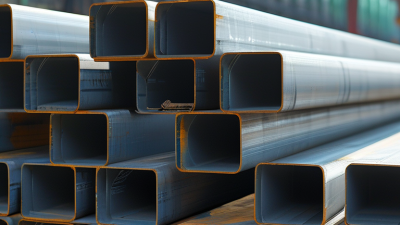
Square Tube products look simple, but their performance depends on precise dimensions, steel grade, wall thickness, and manufacturing control. A small tolerance difference can complicate welding or leave a frame visibly out of square. Buyers also need to compare coating quality, available lengths, testing documents, and delivery reliability—not just price.
The market operates within a vast steel industry. World Steel Association’s World Steel in Figures 2024 reports global crude steel production of 1,892.2 million tonnes in 2023. Its October 2024 Short Range Outlook forecast global steel demand would rise 1.2% in 2025, reaching 1.772 billion tonnes. These figures describe the wider steel market, not square-tube output specifically. That distinction matters. Broad industry growth does not guarantee consistent product quality or dependable export service.
This guide reviews 10 manufacturers for global buyers, focusing on product range, production capabilities, quality documentation, and practical export considerations. Compare each supplier against your actual drawings and specifications. Ask for current test certificates, dimensional tolerances, coating details, and realistic lead times before placing an order. A polished catalog is useful, but it cannot replace verified production records. No shortlist can account for every project; some buyers may value local stock more than a large mill’s scale.
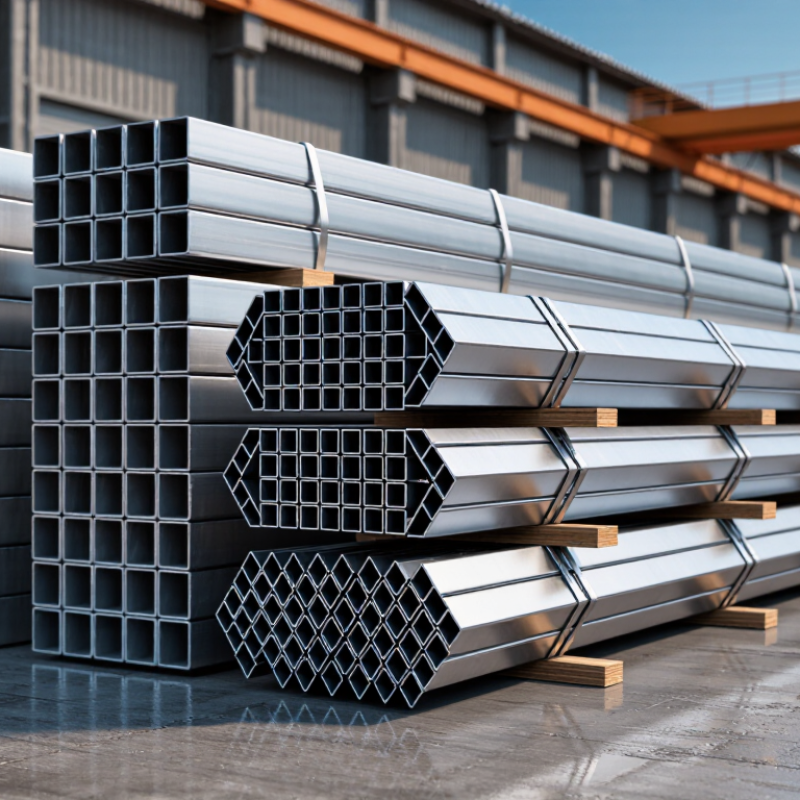
Square tubes are hollow structural sections with four flat sides and formed corners. Their shape offers useful resistance to bending while keeping material weight lower than a solid bar of similar dimensions. Wall thickness, outside dimensions, steel grade, and corner radius all affect performance. Details matter.
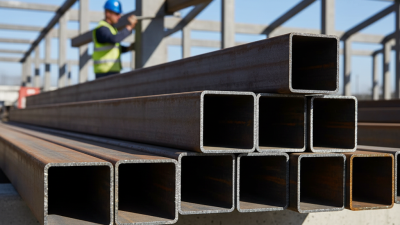
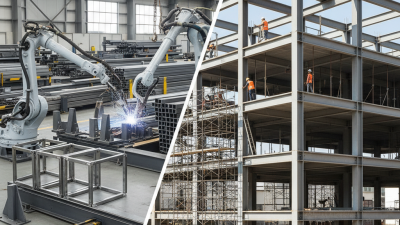
In building frames, square tubes can serve as columns, roof supports, and bracing members. Their flat faces also make it easier to attach plates, brackets, and other components. In manufacturing, they appear in machine guards, conveyor frames, storage racks, and equipment stands. A cut end reveals the wall thickness clearly, but poor cutting or welding can still weaken a joint.
Not always. For a specific application, buyers and engineers should check load direction, span, connection design, corrosion exposure, and manufacturing tolerances. A tube that fits neatly into a frame may still be unsuitable if its wall is too thin for repeated vibration. Protective coatings can help in damp settings, though damaged edges may need extra attention. I would not choose a section by outside size alone; that shortcut is tempting, and sometimes wrong.
Buyer comparison guide: use these verifiable product and service criteria to assess manufacturers. The rows are evaluation benchmarks, not a ranked list of named companies.
| No. | Manufacturer capability to compare | Relevant facts and specifications | Typical industrial relevance | What buyers should verify |
|---|---|---|---|---|
| 1 | Structural carbon-steel tube | ASTM A500 covers cold-formed welded and seamless carbon-steel structural tubing in round, square, and rectangular shapes. Grades include B and C. | Building frames, supports, racks, and general structural fabrication. | Confirm the specified grade, dimensions, wall thickness, and test documentation against the applicable ASTM edition. |
| 2 | European structural hollow sections | EN 10219 specifies cold-formed welded structural hollow sections made from non-alloy and fine-grain steels; square sections are included. | Construction and engineering projects designed to European specifications. | Check the steel grade, delivery condition, dimensional tolerances, and required inspection documents. |
| 3 | High-strength structural tubing | ASTM A1085 is a specification for cold-formed welded carbon-steel structural tubing, including square shapes, with defined mechanical and dimensional requirements. | Projects that specify A1085 tubing for structural design and fabrication. | Request evidence that the offered tube conforms to the project’s specified A1085 requirements; do not assume equivalence to another grade. |
| 4 | Material grade and traceability | Steel grades are defined by the relevant product specification. Material test reports can record chemical composition and mechanical test results for supplied material. | Load-bearing components and projects requiring material records. | Match heat or batch identification on the product to the material documentation and purchase order. |
| 5 | Forming and welding process | Square hollow sections are commonly made by forming flat steel into a hollow profile and joining the seam; applicable product standards define requirements for the finished tube. | General structural and fabricated products where consistent profile geometry is needed. | Ask about available manufacturing routes, seam inspection, and the checks used to confirm finished-product compliance. |
| 6 | Dimensional range and tolerances | Outside dimensions, wall thickness, straightness, corner geometry, and length tolerances depend on the product standard and order specification. | Applications involving fit-up, repeatable assembly, or close fabrication tolerances. | Obtain the supplier’s available size schedule and state required tolerances explicitly on the drawing or purchase order. |
| 7 | Surface finish and corrosion protection | Available finishes may include uncoated steel, painted or powder-coated surfaces, and zinc coatings. ISO 1461 covers hot-dip galvanized coatings on fabricated iron and steel articles. | Outdoor structures, equipment, and environments where corrosion protection is specified. | Specify the coating system, applicable standard, coating requirements, and whether treatment is applied before or after fabrication. |
| 8 | Inspection and quality management | ISO 9001 specifies requirements for a quality management system; certification is not a product specification and does not by itself establish tube-grade conformity. | Procurement programs requiring documented production and inspection controls. | Check certification scope and validity, and separately request product-specific inspection and test records. |
| 9 | Cutting and fabrication support | Suppliers may offer services such as cut-to-length supply, drilling, notching, or other processing; availability is supplier-specific and should be confirmed. | Machinery frames, modular structures, and production assemblies. | Confirm drawing revision, process tolerances, edge condition, packaging, and responsibility for post-processing inspection. |
| 10 | Export documentation and delivery | International shipments commonly require agreed commercial and transport documents; exact requirements depend on the destination, contract, and shipping terms. | Global sourcing and cross-border project supply. | Agree delivery terms, packing method, shipment schedule, document list, and destination-country requirements before ordering. |
Note: Standards and product requirements can be revised. Confirm the applicable edition and project specifications with the supplier before purchase.