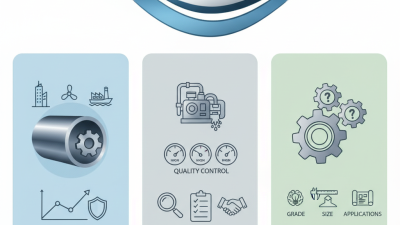
Why Choose Blackened Steel Tube for Global Projects?
Global construction is under pressure to deliver stronger infrastructure with tighter budgets and clearer environmental reporting. The World Steel Association’s World Steel in Figures 2024 reports approximately 1.89 billion tonnes of crude steel production in 2023. That scale shows steel remains central to international construction. It also highlights a practical concern: material choices must be repeatable across borders. Blackened Steel Tube can offer a consistent, industrial appearance while supporting structural, mechanical, and fabrication applications. Its dark mill finish often reduces the need for immediate decorative coating. The surface is not a corrosion barrier.
That distinction matters. Blackened Steel Tube usually carries mill scale and a light oil film, not a permanent protective system. Designers should confirm the applicable specification, such as ASTM A500 for structural tubing or ASTM A53 for certain pipe applications. These standards are not interchangeable. The American Institute of Steel Construction and ASTM International provide reliable reference points for design, testing, dimensions, and material performance. Project teams should also verify equivalent EN or other regional requirements before procurement. A tube that fits one market may fail another’s documentation process.
Real experience is less tidy. Containers may arrive with surface rust after weeks of humid sea air. Cut ends can expose bright steel. Protective wrapping may trap moisture. These details influence site labor and lifecycle cost. Blackened Steel Tube is therefore not automatically the cheapest choice. That assumption needs testing. With correct grade selection, traceability, storage, and a specified coating system, it can provide a practical balance of appearance, strength, and global availability. The right decision depends on exposure, connection design, inspection requirements, and long-term maintenance—not color alone.
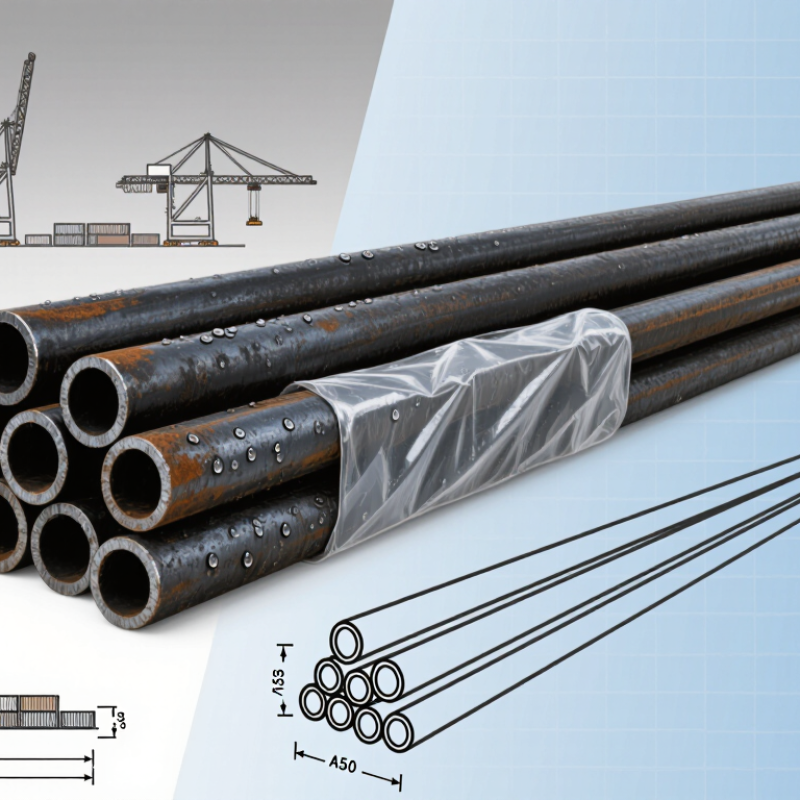
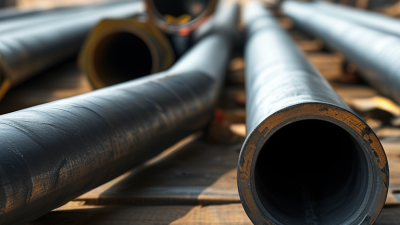
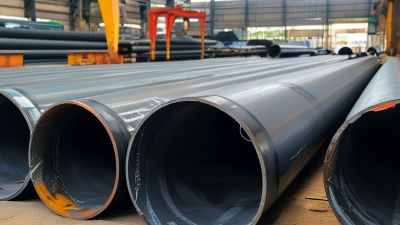
Blackened steel tube is carbon steel tubing with a dark surface appearance. The finish may come from mill scale, controlled oxidation, black oxide, or protective oil. Terminology varies between mills. It looks purposeful.
Its main forms are round, square, and rectangular tubing. ASTM A500/A500M covers cold-formed welded and seamless carbon steel structural tubing in these shapes. It also defines Grades A, B, C, and D, with different strength requirements. However, ASTM A500 does not automatically define a “blackened” finish. That distinction matters. Project specifications should separately identify dimensions, grade, surface treatment, weld quality, and corrosion protection.
During fabrication, blackened tube can provide a strong industrial appearance for frames, supports, façades, and interior structures. The dark surface also makes scratches and weld discoloration visible, which helps inspectors locate finishing defects. Yet it is not a corrosion barrier by itself. Outdoor projects usually need paint, galvanizing, or another engineered system after surface preparation. A careless assumption here can shorten service life.
Global demand also reflects steel’s broad infrastructure role. World Steel Association reported approximately 1.89 billion metric tonnes of crude steel production in 2023, in World Steel in Figures 2024. That scale supports established supply chains, but availability still differs by region. Buyers should verify mill certificates, ASTM compliance, tolerances, and coating compatibility before shipment. The label sounds simple. The specification should not be.
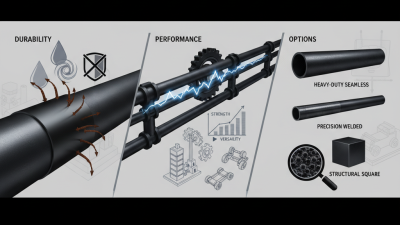
Blackened steel tube remains practical for global projects because it offers a clean mill finish and predictable structural performance. ASTM A500/A500M-23 lists Grade B with a minimum yield strength of 46 ksi and tensile strength of 58 ksi. These values support columns, bracing, frames, and architectural sections when engineers verify loading conditions.
The difference matters on site. A 46 ksi yield point means the tube can resist higher stress before permanent deformation begins. Its 58 ksi tensile strength indicates greater resistance before fracture. However, these figures are minimum requirements, not guaranteed design capacities. AISC 360-22 requires engineers to consider buckling, wall slenderness, connection behavior, and fabrication tolerances. A strong tube can still fail through a poorly detailed joint.
ASTM testing also requires dimensional and mechanical checks, while mill certificates help confirm heat numbers, chemistry, and test results. I would not specify Grade B from strength figures alone. That shortcut causes trouble. Blackened surfaces can show scale, scratches, and handling marks, and they do not replace corrosion protection. For humid, coastal, or chemically exposed locations, project specifications should address painting, galvanizing, or other protective systems.
World Steel Association lifecycle reports repeatedly identify durability and maintenance as major factors in structural sustainability. In practice, Grade B can be a sound global choice, but only when transport, welding procedures, local code requirements, and inspection records are reviewed together. More field feedback would improve confidence.
Blackened steel tube is often selected for global projects because its dark oxide finish looks clean and reduces light surface glare. In fabrication, the process can improve handling and provide a more uniform appearance. However, blackening is not a complete corrosion barrier. The oxide layer is thin, and scratches may expose bright steel underneath.
ISO 12944 classifies atmospheric exposure from C1 to CX. C1 covers dry, heated interiors with very low corrosivity. C2 includes low-pollution indoor areas and rural outdoor conditions. C3 suits urban or moderate industrial environments. C4 applies to coastal zones and industrial locations with higher humidity. C5 covers severe industrial or marine exposure, while CX includes offshore and extreme conditions.
Blackened tube may perform acceptably in C1 or some C2 applications when moisture is controlled. It needs additional protection in C3 and above.
Project inspections should examine cut ends, weld zones, threaded areas, and contact points. These details often corrode before the main tube surface. A suitable primer and topcoat system should match the specified ISO 12944 environment. Surface preparation matters more than appearance alone. Salt, condensation, and trapped water can defeat a good coating plan. It is easy to overstate the value of blackening. The finish is useful, but not magical. Field exposure, maintenance quality, and design drainage still require honest review.
Why Choose Blackened Steel Tube for Global Projects?
Which Global Standards Govern Supply? EN 10219, ISO 9001, and MTR Traceability
Blackened steel tube suits global projects because it offers a practical balance of strength, availability, and fabrication efficiency. Its dark mill finish also helps inspectors identify untreated surfaces before painting or protective coating. However, appearance alone proves nothing. Material performance must match the project specification and service conditions.
EN 10219 governs cold-formed welded structural hollow sections, including dimensional tolerances, steel grades, and mechanical requirements. It supports consistent procurement across different markets. ISO 9001 focuses on the supplier’s quality management system, not the tube’s grade or strength. That distinction matters. A certified system can improve process control, but it does not replace product testing. The Mill Test Report, or MTR, connects each tube to its heat number, chemistry, tensile results, and delivery batch. In practice, traceability becomes crucial when several bundles arrive at a busy site.
Tips: Request the applicable EN 10219 grade before ordering. Check that MTR heat numbers match bundle markings. Confirm welding, coating, and inspection requirements in writing. Keep digital records with receiving photographs. Small gaps can become expensive later. I have seen paperwork look complete while bundle identification remained unclear. That weakness deserves attention, especially when material crosses borders or changes hands.
EN 10219 establishes the technical requirements for cold-formed welded structural hollow sections. The minimum yield strength varies by steel grade, while ISO 9001 governs the quality-management system rather than the steel chemistry or mechanical properties. Material Test Reports (MTRs) connect each delivered batch to its heat, grade, test results, and applicable standard.
Minimum yield strength values shown for common EN 10219 structural hollow-section grades: S235JRH, S275J0H, and S355J2H. EN 10219 does not define blackening as a substitute for corrosion protection. ISO 9001:2015 addresses quality-management systems, while MTR traceability documents material identity and test evidence.
For global projects, blackened steel tube should be compared by delivered performance, not purchase price alone. The American Institute of Steel Construction uses approximately 490 lb per cubic foot, or 7,850 kg per cubic metre, for structural steel density. Therefore, blackened and coated tubes of identical dimensions usually have nearly identical steel weight. The difference appears in surface treatment, handling, and maintenance.
Length changes the calculation. A 6 m tube is easier to unload, store, and move through restricted urban sites. A 12 m tube can reduce joint numbers and installation labor, but it may require longer trailers, wider turning space, and special lifting plans. The International Transport Forum has repeatedly linked freight efficiency with vehicle utilization and last-mile constraints. That matters when projects cross borders. One extra handling stage can erase a factory price advantage.
Check the full landed cost. Include steel price, cutting, packing, inland freight, customs clearance, lifting, and site waste. The 2024 World Steel Association data shows steel remains a major global industrial material, but regional supply and freight conditions still vary sharply. Blackened tube may reduce finishing costs, yet exposed environments can demand paint or corrosion protection. That is an easy cost to underestimate. In practice, a mixed order can work better: 6 m lengths for congested sites and 12 m lengths for repetitive frames. It is not always the cheapest choice. Recheck the loading plan before approval.
| Comparison Item | Blackened Carbon Steel Tube | Hot-Dip Galvanized Carbon Steel Tube | Stainless Steel 304 Tube | Aluminum 6061-T6 Tube |
|---|---|---|---|---|
| Material and Cost Planning | ||||
| Typical application | Structural frames, columns, piling sleeves, process supports, and projects where painting or other corrosion protection is planned. | Outdoor structures and utility supports requiring a zinc coating for atmospheric corrosion protection. | Food, chemical, marine, architectural, and highly corrosive environments. | Lightweight structures, transport equipment, access systems, and applications where low mass is a priority. |
| Indicative material and fabrication cost index | 100 | 115–150 | 300–500 | 180–300 |
| Cost interpretation | Usually the lowest-cost option before coating, with broad availability and comparatively simple cutting, welding, and fabrication. | Higher than blackened steel because of zinc coating, surface preparation, handling, and possible repair of damaged coating after fabrication. | Higher alloy content and specialized fabrication normally produce a substantially higher initial purchase cost. | Lower density reduces transport weight, but alloy price, welding requirements, and joining methods can increase project cost. |
| Best cost strategy | Use when the design permits a separate paint, epoxy, fire-protection, or other specified coating system. | Use when factory-applied zinc protection can reduce field painting and long-term maintenance. | Use when corrosion resistance and service life justify the higher initial investment. | Use when weight savings reduce installation, lifting, or transport costs enough to offset the higher material price. |
| Weight Example for a Comparable Tube Section | ||||
| Reference outside diameter | 114.3 mm | 114.3 mm | 114.3 mm | 114.3 mm |
| Reference wall thickness | 6.3 mm | 6.3 mm | 6.3 mm | 6.3 mm |
| Approximate density used for calculation | 7,850 kg/m³ | 7,850 kg/m³, excluding a small coating allowance | 8,000 kg/m³ | 2,700 kg/m³ |
| Approximate mass per metre | 16.8 kg/m | 16.8–17.1 kg/m | 17.1 kg/m | 5.8 kg/m |
| Approximate mass per 6 m length | 100.7 kg | 100.7–102.6 kg | 102.6 kg | 34.8 kg |
| Approximate mass per 12 m length | 201.4 kg | 201.4–205.2 kg | 205.2 kg | 69.6 kg |
| Weight-saving potential versus blackened steel | Reference | Approximately 0% lower | Approximately 2% higher | Approximately 65% lower |
| 6 m and 12 m Delivery Length Comparison | ||||
| 6 m delivery length | Common and widely accepted for fabrication, truck transport, container loading, and site handling. | Common, but coating protection and bundle handling should be confirmed before shipment. | Common for many tube sizes, although availability depends on grade, wall thickness, and mill production schedule. | Common for standard extruded sections; exact availability depends on alloy, temper, and profile. |
| 12 m delivery length | Often available for selected sizes and production orders; can reduce field joints but may require special road transport or project-specific handling. | Possible for selected sizes, but long lengths may increase coating, lifting, loading, and transport constraints. | Available for some sizes, usually with longer lead times and higher handling requirements. | Possible for selected profiles, but bending, deflection, packaging, and transport control become more important. |
| Estimated number of 12 m lengths replacing 6 m lengths | 50% fewer individual lengths | 50% fewer individual lengths | 50% fewer individual lengths | 50% fewer individual lengths |
| Effect on field joints | Longer lengths can reduce butt joints, welding hours, alignment work, and inspection points where structural design permits. | Fewer joints may reduce field coating repair, but cutting or welding can expose uncoated areas that require zinc repair. | Fewer joints can reduce fabrication time, but welding procedure control and corrosion-cleaning requirements remain important. | Fewer joints can simplify assembly, but thermal expansion and connection design must be checked. |
| Typical transport consideration | 6 m is generally easier for standard delivery; 12 m may require route checks, longer trailers, and additional site space. | Protect bundles from abrasion, impact, standing water, and improper storage that may damage the zinc surface. | Prevent contamination from carbon steel, use suitable lifting equipment, and protect surfaces from scratching. | Use non-abrasive slings and secure bundles to limit bending and surface damage during transport. |
| Project Selection Summary | ||||
| When blackened steel tube is usually the practical choice | When the project prioritizes low initial cost, high structural stiffness, wide size availability, straightforward welding, and flexible 6 m or 12 m procurement, with corrosion protection specified separately. | |||
| When another material may be better | Choose galvanized steel when factory-applied zinc protection is preferred; stainless steel when severe corrosion resistance is required; or aluminum when major weight reduction provides measurable installation and transport benefits. | |||
| Procurement checks before ordering | Confirm outside diameter, wall thickness, steel grade, applicable standard, mill tolerance, straightness, end finish, coating requirements, quantity by metre or piece, 6 m/12 m availability, bundle dimensions, maximum transport length, and required inspection documents. | |||
| Planning note: The cost index is an indicative comparison rather than a quotation. Actual prices vary by country, steel grade, tube size, order quantity, coating specification, energy costs, freight route, customs duties, and delivery terms. Weight values are engineering estimates based on the stated dimensions and nominal material densities; final shipment weight should be confirmed from the supplier's mill certificate and packing list. | ||||